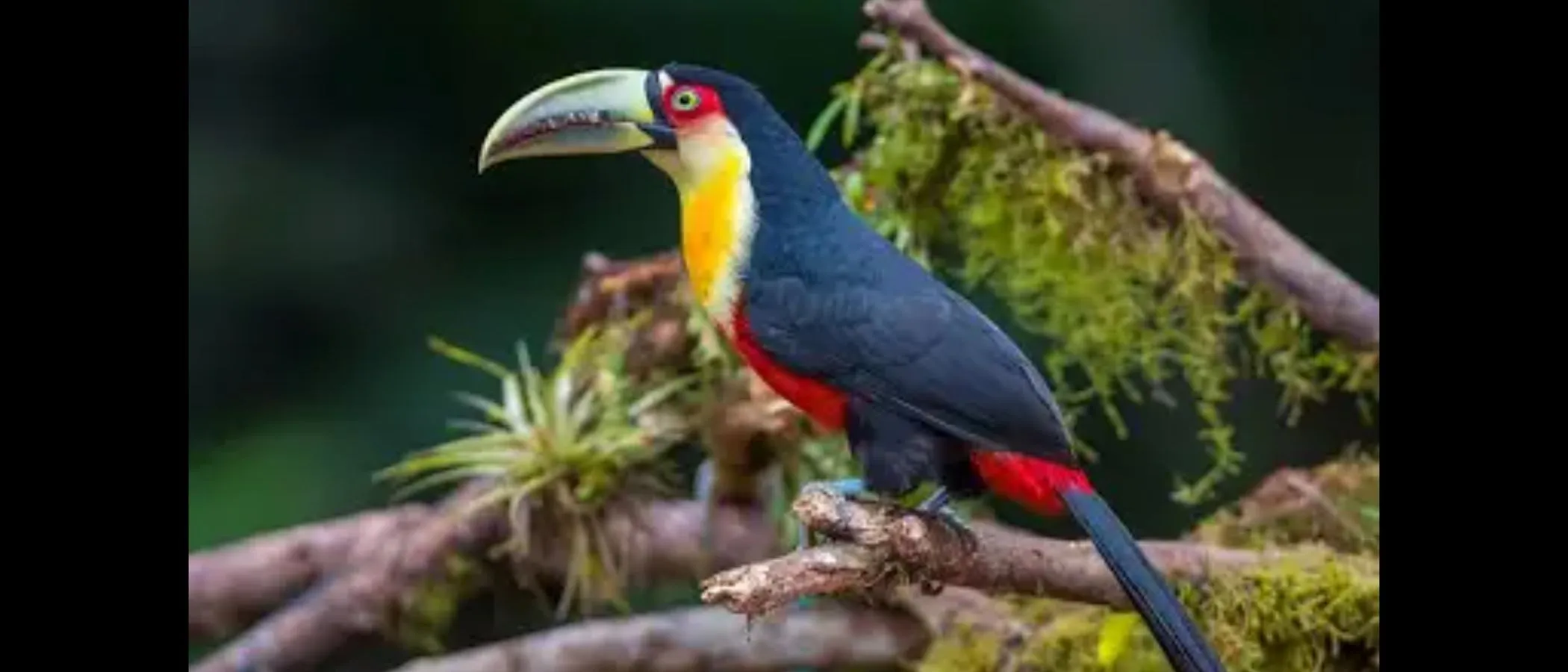
Architecture, Landscape, and Wildlife: Porta do Sol’s Natural Legacy
There are places that go far beyond the beauty of their homes or the quality of their infrastructure. Places whose true wealth lies in their ability to preserve nature and foster a harmonious coexistence between human beings and the environment. Residencial Porta do Sol is one of those rare examples.
Conceived from a visionary approach for its time, the development was born inspired by a concept that has since become a global benchmark: integrating urban planning, architecture, landscape design, and environmental preservation. The master plan, developed by Oscar Niemeyer, combined with the landscaping of master Roberto Burle Marx, gave rise to a space in which human occupation respects the topography, vegetation, and natural resources, allowing nature to remain the protagonist of the landscape.
Decades after its implementation, this philosophy remains evident. Walking along the tree-lined streets of the residential community means realizing that life unfolds in perfect harmony with the forest. The songs of birds announce dawn, the treetops shelter countless bird species, and, with a little luck, it is possible to observe wildlife living freely in its natural habitat.
Toucans, parakeets, tanagers, woodpeckers, seriema, hawks, owls, hummingbirds, and dozens of other species turn the sky into a permanent spectacle. Among the vegetation, it is also possible to see squirrels, armadillos, coatis, porcupines, lizards, and small mammals that find food, shelter, and safety in the expansive green area of the development to complete their natural life cycles.
This constant presence of wildlife is no accident. It is one of the strongest indicators of the environmental quality found within the development. A balanced ecosystem shows that the preservation areas continue to fulfill their role, protecting springs, fragments of the Atlantic Forest, and ecological corridors essential to the survival of countless species.
However, living surrounded by this natural richness also means taking on responsibilities. Wild animals must remain free. Feeding them, capturing them, or altering their habits can cause dependency, change their behavior, and compromise the delicate ecological balance. Responsible coexistence depends on simple actions, such as respecting forest areas, reducing vehicle speed on internal roads, keeping pets under control, and preserving native vegetation.
More than an environmental issue, this is a collective commitment. Every resident becomes a guardian of this natural heritage, helping ensure that future generations can enjoy the same biodiversity that today delights those who live in or visit Residencial Porta do Sol.
In this context, the work carried out by Núcleo da Floresta São Roque deserves recognition, as its dedication to environmental education, awareness, and the appreciation of regional fauna and flora strengthens a culture of preservation. Its initiatives bring the community closer to nature and reinforce the idea that protecting the environment is a shared responsibility.
At a time when sustainability has gone from trend to necessity, Residencial Porta do Sol shows that high-end developments can be leaders in environmental conservation. True luxury lies not only in architecture, exclusivity, or a privileged location, but in the opportunity to live in a place where birdsong still wakes residents, where century-old trees tell stories, and where wild animals continue to find a safe refuge.
Preserving this heritage means preserving the very essence of Residencial Porta do Sol. It means recognizing that development and nature do not have to move in opposite directions. When planning, respect, and environmental awareness come together, a legacy is born that transcends generations and inspires a new way of living: more connected to the land, more sensitive to biodiversity, and more committed to the future.
By Eliana Beltrame
Real Estate Advisory
Credits: This article recognizes and values the work developed by Núcleo da Floresta São Roque, whose efforts are essential to environmental awareness and the preservation of the region’s fauna and flora.
This version has a style closer to a high-end magazine, such as Casa Vogue, and should exceed 4,000 characters. It also strengthens your image as a specialist in the luxury real estate market, combining knowledge of architecture, sustainability, and quality of life.